What a Gambling Calculator Can Tell You (and What It Never Will)
2026-08-21 · 18 min · 3,410 words
A professional sports bettor wins about 55 of every 100 bets at even money. That's enough to build a career on — and it still comes with losing weeks, ugly months, and stretches where every model looks broken. The amateur at the next screen over might be up more today, because he backed his hometown club on a hunch and got lucky. Check back in five years, though, and only one of them still has a bankroll.
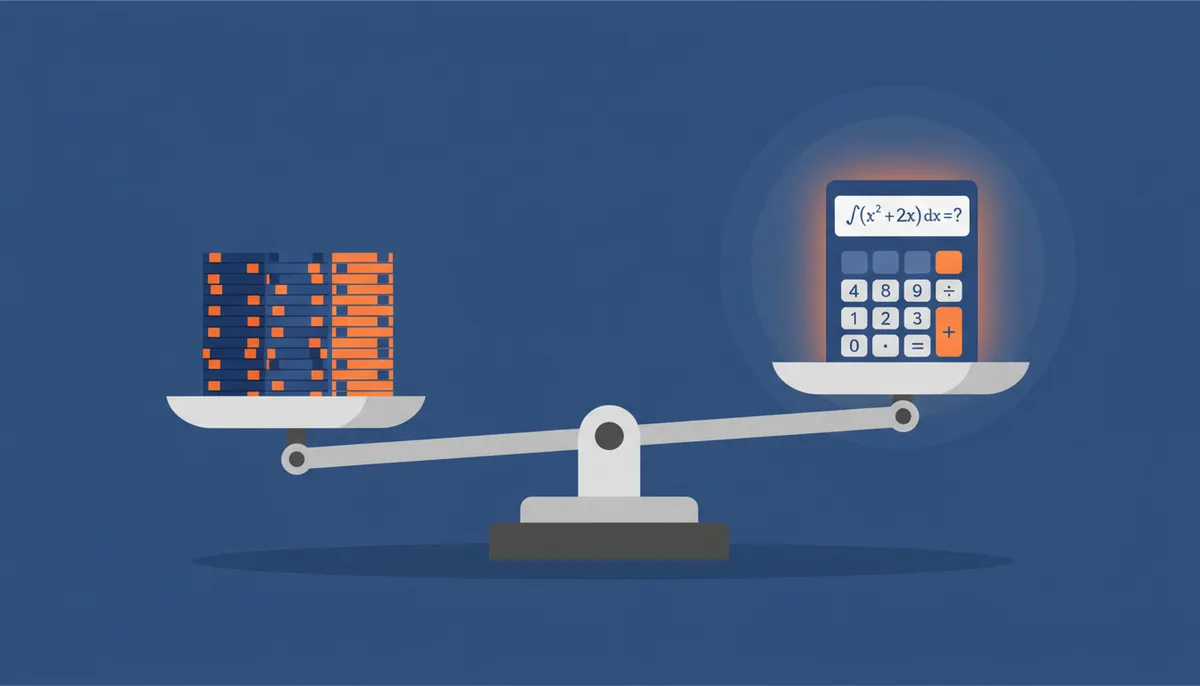
That gap isn't about luck. It's about treating gambling as a series of math problems instead of a series of predictions. And that's exactly where calculators earn their keep: they turn the fuzzy question "what do I feel good about?" into the sharper question "what does the math say this decision is worth?"
This guide walks through what every major type of gambling calculator actually does, where each one pays for itself, and — just as important — the things no calculator can see.
Why Do Professionals Use Calculators If Gambling Is About Luck?
Luck decides what happens next. Math decides what happens eventually. Professionals stake their money on "eventually."
Consider how thin the margins really are. Bookmakers typically price a coin-flip market — two evenly matched sides — at around 1.91 each (the -110 line American bettors know well). At those odds you need to win 52.4% of your bets just to break even. A bettor who wins 55% runs a return on turnover of about 5%. That five percent is the entire business. No human intuition can see a five percent edge; it hides inside the noise of thousands of individual wins and losses. You need a calculator to measure it, and a calculator's discipline to protect it.
The amateur mindset is different in kind, not degree. It chases the feeling of being right about one event: tonight's match, this hand, the next spin. It remembers wins and files losses under "bad luck." The professional mindset barely cares about any single outcome. It asks whether the decision was profitable on average — whether the price taken was better than the true probability justified — and trusts that repetition turns small edges into money.
How long is "the long run"? Longer than intuition suggests. A sports bettor with a real edge needs something like a thousand bets before the signal separates from the noise. A poker player thinks in samples of a hundred thousand hands. A slots player never gets there in a human lifespan — which is itself useful information.
That's the core idea behind every tool in this article. A gambling calculator doesn't predict the next card, spin, or goal. It replaces guesswork with a mathematical model of the game's structure, so you can make the most profitable decision on average. Learn to think that way and the tools become genuinely powerful. Skip that mental shift and they're just number generators.
What Is the One Job Every Gambling Calculator Performs?
Strip away the interfaces and every gambling calculator — poker equity, slot RTP, sports betting EV, roulette systems — does one thing: it measures and compares probabilities. It converts a situation into a number, and that number becomes something you can weigh against a price.
The price comparison is the whole trick. A poker equity calculator tells you your flush draw wins 32% of the time. Useless on its own. But put it next to the pot odds — the pot is laying you 3-to-1, meaning you only need 25% — and suddenly you have a decision. A slot's 96% RTP means nothing until you multiply it by your bet size and spins per hour and discover your entertainment costs about $20 an hour. An EV calculator's "+$25" only matters relative to the $100 you were about to stake.
Notice what none of these outputs does: tell you what happens next. The distinction sounds pedantic until it costs you money, so make it explicit:
- A probability ("you'll hit your flush about 1 time in 5") describes the average over many repetitions.
- An expected value ("this call earns $12 on average") describes the long-run worth of a decision.
- A prediction ("the river will be a heart") is something no calculator offers, whatever the marketing says.
How Poker Equity Calculators Actually Work
You are on the turn with A♥ K♥ and the board reads 7♥ Q♠ 2♥ 9♣. Nine hearts remain that give you the nut flush, and your ace or king might pair up to beat a queen. But some of those outs are dirty — a non-heart ace still loses to two pair, and you have no way to know whether villain already has you drawing nearly dead with a set. Counting outs in your head is a mess because not every out is clean, and you do not know what the other player holds. A poker equity calculator cuts through this by simulating thousands — sometimes millions — of possible runouts against every hand your opponent might reasonably have.
The mechanism is either exhaustive enumeration or Monte Carlo simulation. If you input an exact hand for your opponent, the calculator can check all remaining card combinations mathematically. Against a range — say, a typical continuation-bet mix of top pair, flush draws, open-ended straight draws, and ace-high bluffs — it deals random rivers and records wins, losses, and ties. Your equity percentage is simply your share of the pot over those trials.
In that A♥ K♥ example, against that continuation-bet range, your exact equity on the turn is about 45%. Now villain bets $40 into a $100 pot. You are getting 3.5-to-1, which means you need only 22% equity to justify a call. The calculator turns a vague "I have a lot of outs" into a clear binary: call, because 45 crushes 22.
Change one card to a paired board — the turn is the Q♣ instead of the 9♣, making the board 7♥ Q♠ 2♥ Q♣ — and the same flush draw drops to roughly 20% equity against the same range. The pot still offers 3.5-to-1, but your ace and king outs now lose to trips, and only the remaining hearts keep you alive. What was a clear call becomes a fold. A human brain cannot recalculate that in real time. The calculator detects the collision instantly.
Multi-way pots introduce another layer. Add a second opponent and your equity does not halve cleanly; it shrinks based on how much their ranges overlap. If both opponents can have queens and hearts, your A-high flush draw might plummet to 24%, but the pot is bigger and the price is better. The calculator balances these forces so you do not have to.
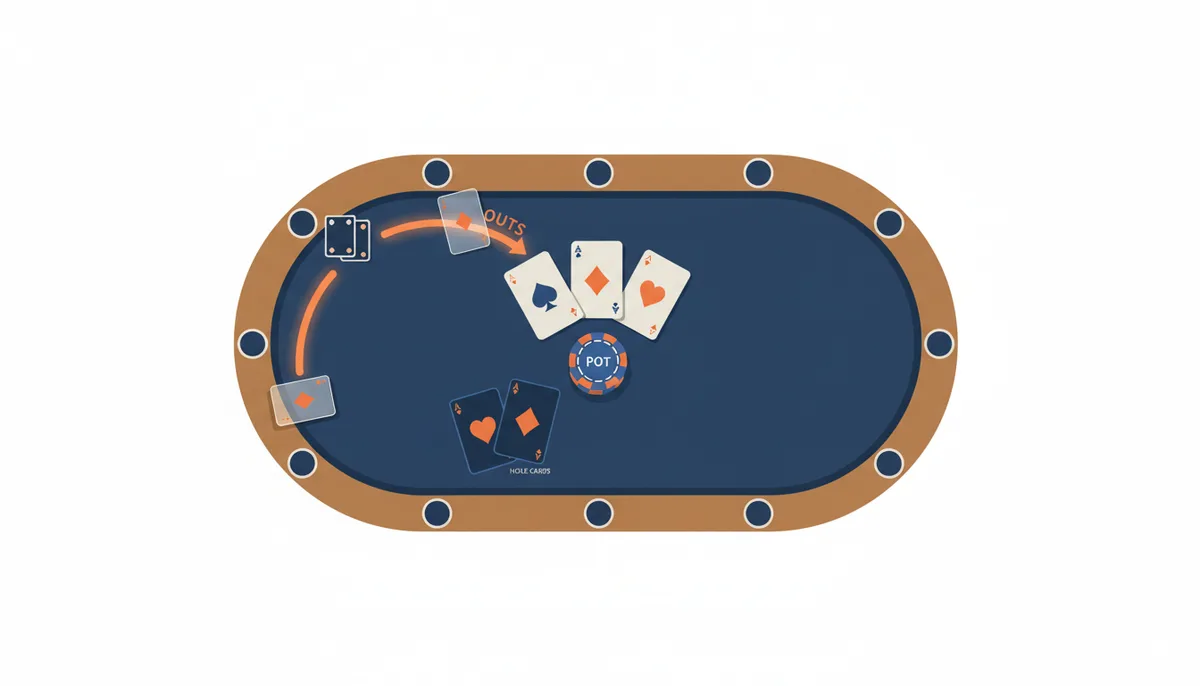
SorteCalc's Poker Equity Calculator runs these simulations instantly. From there, you pair it with the Pot Odds Calculator to price the call, or the Implied Odds Calculator to factor in money you might win on the river if you hit. None of these tools tell you the next card. They tell you whether the price to see it is fair.
Why Casino Game Calculators Measure Loss, Not Victory
You walk into a casino with $200 and a system. Four hours later you leave with $180. Most players file that under "bad luck." The calculator files it under "expected." For games of pure chance, no tool can find a winning strategy because none exists inside the game's structure. What the calculator finds is the built-in fee — the house edge — and shows you exactly how fast it drains your stack.
The house edge is the gap between true odds and payout odds. In European roulette there are 37 pockets. A single-number bet pays 35-to-1, but the true odds are 36-to-1. That gap is 1/37, or 2.70%. It is the same on every spin, for every bet type, forever. Return to Player (RTP) is just the inverse: 97.30%. The two numbers are the same coin viewed from opposite sides.
Here is what that means in practice. You play European roulette at $10 per spin, 50 spins an hour. Expected loss per hour is $10 × 50 × 0.027 = $13.50. But standard deviation is the reason you might win $60 or lose $140 in any given hour. Over one hour, luck swamps the math. Over a thousand hours, the 2.70% becomes a wall.
Betting system calculators show you the shape of the risk, not a path around the edge. Take the Martingale. Start with a $10 unit. Lose, bet $20. Lose, bet $40. After six consecutive losses — roughly a 1.5% chance on a near-even roulette bet — you must wager $640 just to win your original $10 back. You need a bankroll of $1,270 to survive that sequence. The SorteCalc Martingale System Calculator draws this curve precisely. It reveals that the system does not flip the house edge; it simply trades frequent small wins for rare, catastrophic losses. Expected value stays negative.
| Game | House Edge | RTP | Key Player Decision |
|---|---|---|---|
| Blackjack (Basic Strategy) | ~0.5% | ~99.5% | Hit, stand, double, split |
| Baccarat (Banker Bet) | 1.06% | 98.94% | Paying commission on wins |
| Craps (Pass Line) | 1.41% | 98.59% | Taking/laying odds behind the line |
| European Roulette (Even Money) | 2.70% | 97.30% | None — bet selection cannot change the edge |
| 96% RTP Slot | 4.00% | 96.00% | Volatility level only |
| American Roulette (Even Money) | 5.26% | 94.74% | None — avoid this wheel if possible |
The Fibonacci, D'Alembert, and Labouchère calculators do the same work. They model how your bankroll moves under different progressions. They prove that no progression changes the RTP. The only decision these calculators support is whether you prefer to bleed slowly or risk amputation.
Finding Value Where the Bookmaker Prices Wrong
A bookmaker offers 2.20 on a tennis player you think is a 50/50 shot. Most bettors see a name they recognize and move on. You should see a price error. Sports betting calculators turn those odds into implied probabilities, compare them against your own estimate, and flag the gap. That gap is where money lives.
The mechanism is straightforward. Decimal odds of 2.20 imply a probability of 45.45% (1 ÷ 2.20). If your research — whether statistical modeling, injury reports, or matchup analysis — says the true probability is 55%, you have an edge. The Expected Value calculation runs like this: a $100 stake returns $220 total, so $120 profit. EV = (0.55 × $120) − (0.45 × $100) = +$21. Every time you make that bet, you earn $21 on average. The SorteCalc EV calculator exists to surface these figures before you click "place bet."
Bookmakers protect themselves with vigorish. A fair coin-flip market would offer 2.00 on both sides. A real book offers 1.91 each. The implied probabilities sum to 104.7%; the 4.7% overround is the book's margin. You must beat both the true probability and the vig. A calculator that ignores vig tells you half the story; a good one bakes it in.
Arbitrage is the extreme case. Suppose Book A offers 2.05 on Team X and Book B offers 2.05 on Team Y. The implied probabilities sum to 97.56%. Because that is under 100%, a risk-free profit exists regardless of who wins. If you stake $50 on each side from a $100 bankroll, the winner returns $102.50. The SorteCalc Arbitrage Calculator handles uneven odds too: if Book A offers 2.10 and Book B offers 2.00, it tells you to stake $48.78 on the 2.10 and $51.22 on the 2.00 for equal profit either way.
The hidden costs are operational, not mathematical. Arbitrage requires accounts at five to ten books, rapid execution before lines move, and tolerance for limits. Many sportsbooks flag arbers and cap their stakes to pennies within weeks. For standard value betting, the cost is pricing skill. A model that takes twenty hours to build and generates a 1% edge on $100 bets is a hobby, not a salary. The calculator finds the math; you must decide if the math justifies the effort.
The Information Every Calculator Is Blind To
The calculator says shove. You shove. Villain snap-calls with the nuts. What did the machine miss? It missed that villain had not played a hand in two hours and suddenly check-raised all-in. Standard equity calculators have no input for "opponent is terrified" or "this player is on tilt." They run math against a range you typed. If your range is fiction, the output is a lie with decimal places.
This is the human element in poker. Tells, timing, table talk, and recent history do not fit into a hand matrix. Advanced players approximate by widening or tightening ranges — "he is looser when steaming" — but that adjustment comes from observation, not the tool. The calculator computes; it does not see.
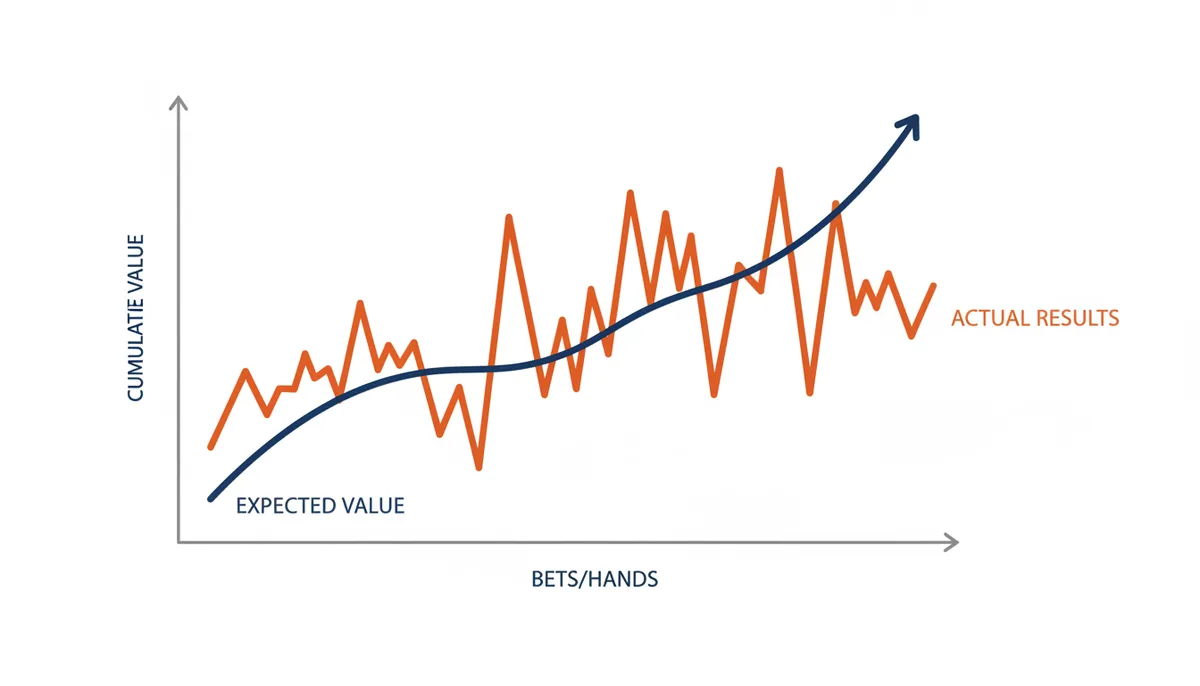
Variance is the other blind spot, and it bites harder because it is invisible. A calculator can prove a decision is +EV. It cannot tell you that you will lose the next twelve times. At standard -110 odds, a bettor must win 52.4% of wagers just to break even. A sharp bettor with a 5% edge wins roughly 55% of bets. Over 100 such bets, expected profit is 5 units, but standard deviation is about 10 units. Being down 5 units after 100 bets is one standard deviation below expectation — entirely normal. Down 15 units? You are having a rough run, but you still do not have enough data to prove the edge is gone. The calculator draws the straight line; variance draws the earthquake around it.
ICM calculators carry their own blindness. They assume every player at the tournament table is of equal skill and that future cards are random. In reality, if you are surrounded by professionals, your tournament equity is lower than ICM suggests because you will bleed chips later. If you are surrounded by novices, your chips are worth more than the model says. The calculator treats chips as commodities; they are actually weapons wielded by humans with different abilities.
Even blackjack basic strategy calculators assume specific rules. A table paying 6:5 on blackjack instead of 3:2 adds roughly 1.4% to the house edge. The calculator you used at home might have assumed the favorable rule. The label "blackjack" is not enough; the specific ruleset determines the output.
The Exact Workflow for Using a Calculator in a Real Decision
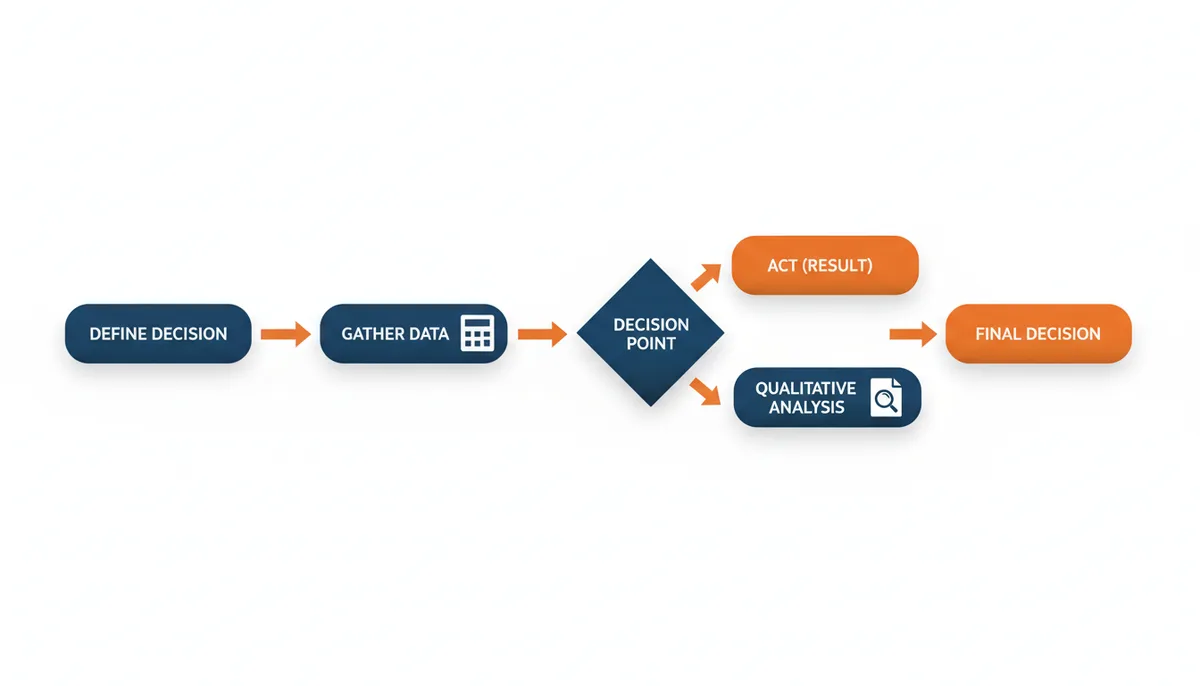
When the clock is running down — whether a live poker timer or a closing line on a match — you need a process, not panic. Here is a repeatable workflow that integrates the calculator without letting it drive blindly.
Step one: Name the exact decision. Not "should I play?" but "should I call this $40 turn bet with this hand against this opponent's range?" Precision matters because the wrong calculator gives the right answer to the wrong question.
Step two: Pick the tool.
| Your Question | Game | Recommended Calculator | What It Tells You |
|---|---|---|---|
| Am I getting the right price to chase my draw? | Poker | Pot Odds Calculator | The risk/reward ratio and required equity |
| How much of this pot belongs to me? | Poker | Poker Equity Calculator | Win probability against an estimated range |
| Is this tournament deal fair? | Poker | ICM Calculator | The real dollar value of chip stacks |
| Does my prediction beat the bookmaker's line? | Sports | Expected Value Calculator | Estimated percentage return on stake |
| Can I lock in a risk-free profit? | Sports | Arbitrage Calculator | Exact stake sizes across different books |
| How fast will this game drain my bankroll? | Casino | House Edge / RTP Tool | Hourly expected cost at your bet size |
| What bet size grows my bankroll fastest? | Any | Kelly Criterion Calculator | Optimal fraction of roll to stake |
| Will this progression bust me before I win? | Casino | Martingale / Labouchère Calculator | Risk of ruin versus session win rate |
Step three: Gather inputs honestly. The pot is $83, not "about 80." Villain's range comes from their actual stats over 500 hands, not a default chart you read in a book. In sports, your true probability comes from your model, not a hunch after watching highlights.
Step four: Run the calculation. Get the number. 31.4% equity. +$4.20 EV. 12% Kelly fraction.
Step five: Layer what the machine missed. If the output is extreme — say 45% equity when you need 20% — you do not need a soul-read. Act. If it is close — 24% versus 25% required — qualitative factors swing the decision. Is villain capable of bluffing here? Are you on the tournament bubble? Did they just take a bad beat and are now tilting?
Step six: Execute and log. Decisions are only as good as the feedback loop. Record the calculator's output and the actual result. After 500 repetitions, check whether your qualitative adjustments helped or hurt. That is where you improve; the calculator only gets you to the starting line.
Consider a concrete tournament spot. Blinds are 500/1,000. You hold 35,000 on the button with A♠ Q♠. The cutoff raises to 2,200. Raw ICM says calling is +1.2% equity versus their range. But the big stack in the small blind has squeezed over callers 40% of the time. You estimate that threat burns 8% off your equity. The adjusted number goes negative. Fold. The calculator started the thought; your observation finished it.
The Costly Mistakes People Make With Perfect Math
A friend shows you a beautiful spreadsheet. His model promises 40% annual returns on sports bets. He loses his bankroll by March. The calculator did not fail; his interpretation of it did. Here is how good math turns into bad decisions.
The Gambler's Fallacy wears a calculator's clothing. You run a roulette system calculator and see that after eight consecutive reds, the chance of red on the next spin is still 48.6%. You nod, then look at the board and think black is "due." The machine gave you the independence of events; your brain supplied the narrative. The math is worthless if you override it the moment variance arrives.
Garbage In, Garbage Out is the most expensive error because it hides behind precision. You estimate villain's range as the top 10% of hands. The calculator gives you 38.246% equity. Impressive decimals. But villain is a recreational player who limp-calls 40% of hands and never raises without top pair. Your range is fantasy. The true equity might be 15%. Always ask where your inputs came from. If the answer is "a default chart," your output is decoration.
Betting system calculators breed a special false security. The SorteCalc Labouchère calculator shows a gentle stair-step profit curve with a cliff at the end. Players read "85% chance I hit my session goal." They fail to multiply: 85% chance to win $100, 15% chance to lose $1,300. Expected value is still negative because the loss is thirteen times the win. The calculator presented the facts; optimism obscured them.
Chasing microscopic edges carries operational costs that calculators ignore. You find a 0.3% arbitrage on a table tennis match. You stake $1,000 across two books to make $3. One book voids the wager as a "palpable error." The other stands. Now you have $500 of exposure on a match you never wanted to bet. Worse, both books may limit your account to $5 stakes forever. The calculator found the mathematical edge; it did not model counterparty risk.
Finally, overfitting destroys bankrolls. You build a horse racing model on three years of historical data. It shows a 12% ROI. You bet real money and lose. You overfit the noise. The calculator executed the formula flawlessly; the formula described the past, not the future.
The entire article HTML, headings, FAQs, and body text must be in English.
All SEO metadata (seo_title, seo_description, tags, slug) must be in English.
Sources
- The Theory of Poker by David Sklansky (Two Plus Two Publishing) — Fundamental theorems and concepts of poker strategy, including pot odds, implied odds, and the basis for many poker calculations.
- Nevada Gaming Control Board — Official regulations on gaming and casino operations.
- Wizard of Odds — Detailed mathematical analysis of casino games, betting systems, and strategy, providing verifiable data for house edge, RTP, and probability claims.